

Global financial markets rallied last week as investors stepped in again to buy the prior week’s dip in prices. Japan, Germany, Spain, and Italy were international market standouts. In the US, the S&P 500 fell just shy of a new all-time high, while the tech-heavy NASDAQ inked another all-time high. Apple was one reason why the market did so well last week, adding 8.4% on the week due to an increase in cap-ex of $100 billion earmarked for US manufacturing. The increase brings Apple’s total infrastructure spend to $600 billion. Additionally, Apple’s products made in India will not be subject to tariffs, which were raised by 25% to 50% by President Trump in a bid to have India stop importing Russian crude. Mega-Cap Tech issues led the advance with strong performance from Google, Microsoft, and Tesla. The Mega Cap ETF increased by 3.6% versus the equally weighted S&P 500 index’s return of 0.8%. Q2 earnings continued to come in better than expected. McDonald’s and Palantir had fantastic quarters while AMD and Amgen’s results were somewhat disappointing. Eli Lilly’s shares fell nearly 15% on poor phase 3 results for its oral weight loss drug.

President Trump appointed Stephen Miran temporarily to the Federal Reserve Board seat vacated by Adriana Kugler and suggested over the week several candidates for the Fed Chairman position, including: Kevin Marsh, Kevin Hasset, Chris Waller, James Bullard, and Mark Summerlin. Separately, St Louis Fed Governor Musalem suggested that the current policy rate was appropriate because inflation is likely to stay elevated given the recent tariffs. Positive negotiations in the Middle East with Russia have led to a meeting between President Trump and Putin this Friday in Alaska. The meeting comes after a ceasefire deadline passed last Friday.
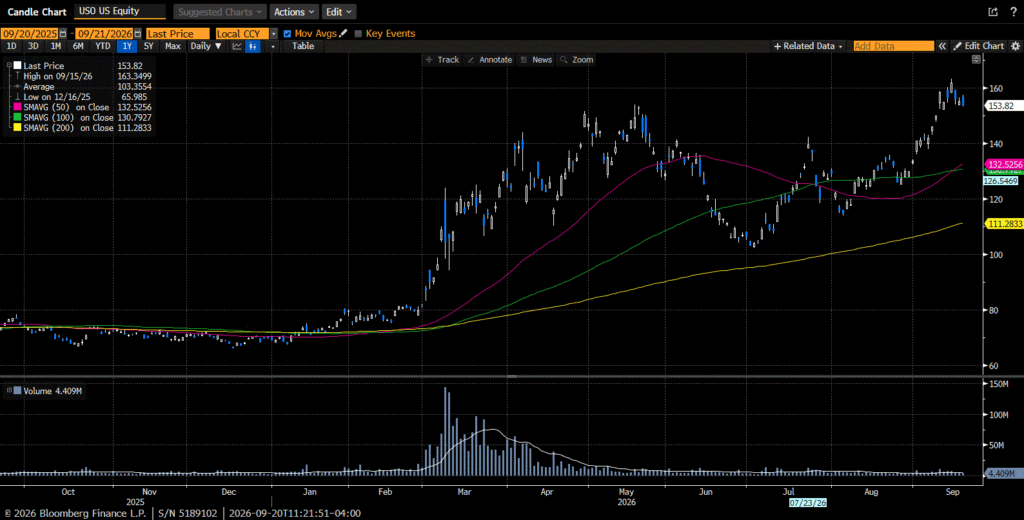
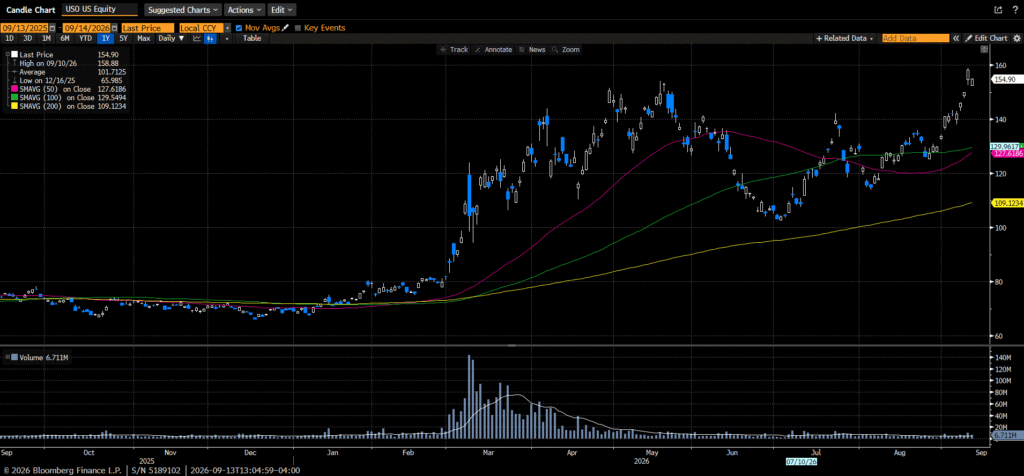
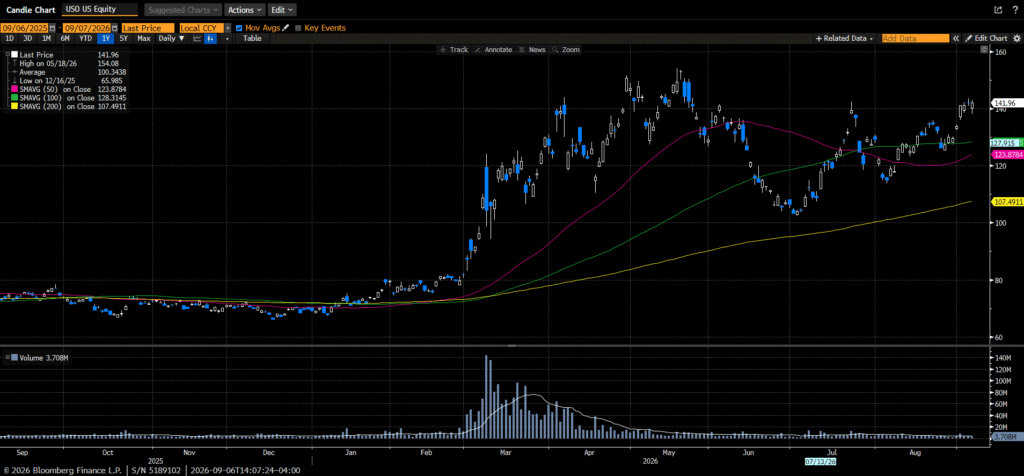
The S&P 500 gained 2.4%, the Dow rose 1.4%, the NASDAQ increased by 3.9% and the Russell 2000 advanced by 2.4%. US Treasuries gave back some of their gains from the prior week with losses across the entire curve. The 2-year yield increased by six basis points to 3.76%, while the 10-year yield increased by seven basis points to close at 4.29%. Notably, all of the Treasury auctions were met with tepid demand and disappointing results. Oil prices slumped by 5.2% or $3.47 to close at $63.88 a barrel. Weakness in crude was partly a function of OPEC+’s decision to increase production to 547,000 barrels per day starting in September. Gold prices touched all-time highs before settling just below $3,500 per ounce. News that a 39% tariff would be placed on one kilogram and 100 Oz Gold bars sent futures prices in the US materially higher versus futures settling on the London Metal Exchange. Trump said late Friday that these levies would not be imposed. Copper prices increased by $0.04 to close at $4.47 per Lb. Bitcoin’s price increased by 4.17% over the last week and is currently trading at $118,684. The US Dollar index fell by 0.5% to 98.18.

The Federal Reserve kept its policy rate at 4.25%-4.50% as expected. Fed Governors Bowman and Waller voted for a 25 basis point cut, which was the first dissent by two Governors since 1993. Chairman Powell did not move away from his stance that the economy and the labor market continue to be resilient and that inflation continues to be sticky, with a lot of unknowns associated with the tariffs. Interestingly, Fed funds futures moved from about a 69% probability of a rate cut in September to 39% post-meeting. A much weaker payrolls number on Friday reversed this move, with Fed Fund Futures now pricing in an 80.3% chance of a rate cut in September.
The S&P 500 declined by 2.4%, the Dow shed 2.9%, the NASDAQ fell by 2.2%, and the Russell 2000 lost 4.2%. The US yield curve steepened with a massive move on Friday that nearly made up for all the losses in July. The 2-year yield fell by twenty-two basis points to close at 3.70%, while the 10-year yield fell by seventeen basis points to 4.22%. Trade in commodities was extremely volatile over the week, and it witnessed one of the most significant selloffs in copper’s history. Prices fell by 23.4% or $1.36 to $4.43 per Lb. Trump placed a 50% tariff on semi-finished products rather than on raw copper inputs, which had been expected. Gold prices increased by nearly 2%, closing at $3,399.60 per ounce. Oil prices traded almost 3% higher to $67.35 per barrel on fears that more sanctions would be placed on Russian oil. Trump has put an August 8th deadline for a ceasefire between Russia and Ukraine and threatened Russia with more sanctions if they did not comply. Tensions rose further on reports that the US had sent two nuclear submarines to the region. Oil might lose some of last week’s gains after OPEC+ announced a larger-than-expected increase in production output on Saturday. Bitcoin prices fell by 4.32% from a week ago to $133,374.

The economic calendar was quiet this week. ISM Services PMI fell to 50.1%, below the prior reading of 50.8 and just above the threshold for contraction. Contraction in the underlying Employment Index and an acceleration in the Price Index were reasons for concern. Factory orders in June fell by 4.8% from a prior revised reading of 8.2%. Initial Claims increased by 7k to 226 K, while Continuing Claims jumped by 38K to 1.974K. Q2 Productivity came in at 2.4% versus the consensus estimate of 2%. Q2 Unit Labor costs increased by 1.6% versus an estimated 1.7%. In the coming week, we will receive the Consumer Price Index, the Producer Price Index, and Retail Sales.
Investment advisory services offered through Foundations Investment Advisors, LLC (“FIA”), an SEC registered investment adviser. FIA’s Darren Leavitt authors this commentary which may include information and statistical data obtained from and/or prepared by third party sources that FIA deems reliable but in no way does FIA guarantee the accuracy or completeness. All such third party information and statistical data contained herein is subject to change without notice. Nothing herein constitutes legal, tax or investment advice or any recommendation that any security, portfolio of securities, or investment strategy is suitable for any specific person. Personal investment advice can only be rendered after the engagement of FIA for services, execution of required documentation, including receipt of required disclosures. All investments involve risk and past performance is no guarantee of future results. For registration information on FIA, please go to https://adviserinfo.sec.gov/ and search by our firm name or by our CRD #175083. Advisory services are only offered to clients or prospective clients where FIA and its representatives are properly licensed or exempted.