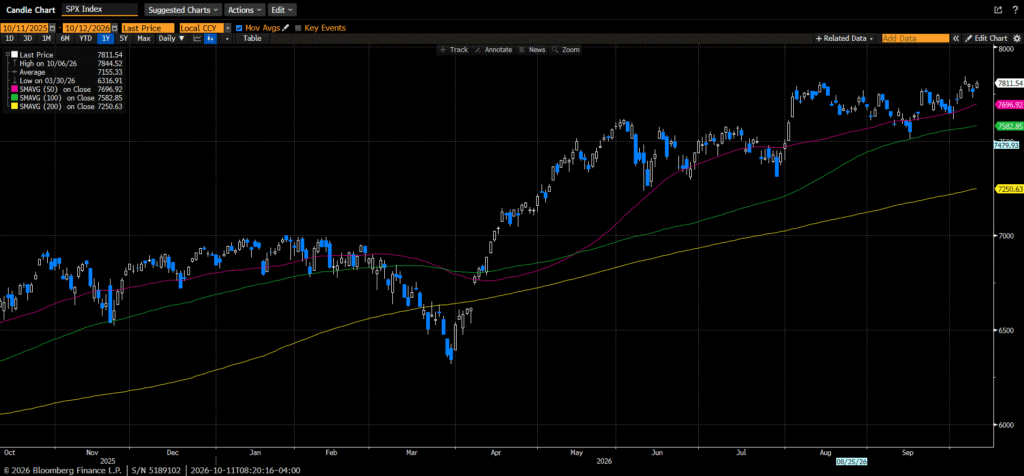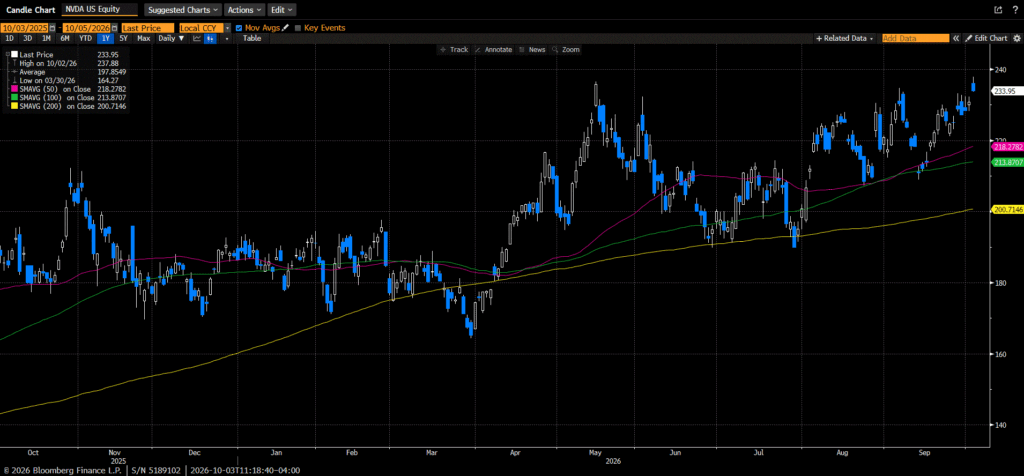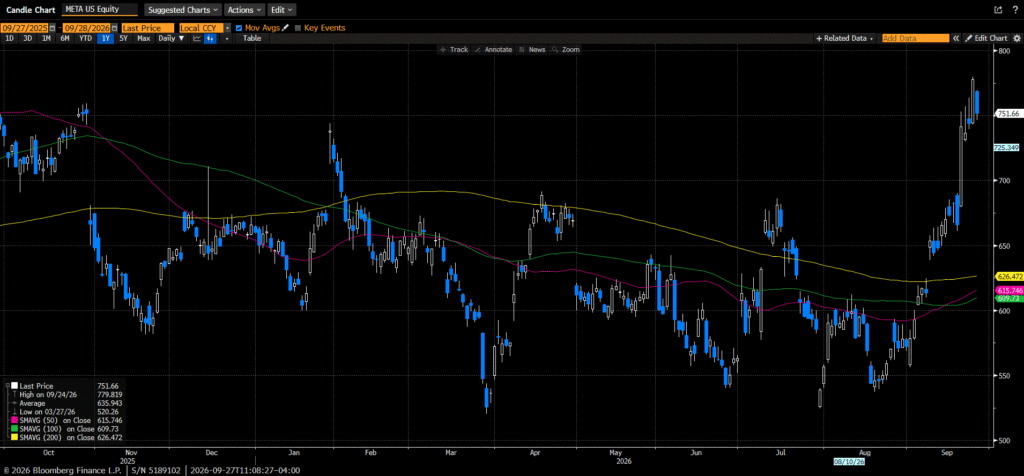


The S&P 500 and NASDAQ reached another set of all-time highs, driven by constructive rhetoric on global trade and positive second-quarter earnings results from influential companies such as Alphabet. The S&P is up 8.6% year to date, while the NASDAQ is up 9.3% for the year.

A trade deal was announced with Japan that imposes a 15% tariff on Japanese goods and allows US rice and autos to be exported into Japan. The deal also includes a $550 billion direct investment from Japan into US infrastructure and manufacturing capabilities. Notably, there are still several details to work out, especially related to the direct investment, but the news helped propel the US and Japanese markets higher. A meeting is scheduled for President Trump to meet with Ursula von der Leyen, the President of the European Commission, on Sunday to discuss US and EU trade levies. Currently, the US is poised to place a 30% tariff on EU goods, but it has been reported that these could be reduced to 15% to 20%. If an accord cannot be reached, the EU has created reciprocal tariffs on US goods to the tune of $100 billion. Of note, the EU left its monetary policy rate unchanged in last week’s meeting. Treasury Secretary Bessent and Chinese trade authorities also sent a positive vibe on trade negotiations. Bessent pushed back against the idea of a hard deadline of August 12th, stating that these negotiations would be ongoing and could last for several months.

About a third of the S&P 500 have reported second-quarter earnings results, and while results have been mixed on an aggregate basis, they have been better than expected. That said, according to FactSet, if the results remain the same as they are now for the rest of the companies set to report earnings per share, growth of 6.4% will be the lowest since the first quarter of 2024. Interestingly, revenue growth has been better than expected, and the street now expects calendar year 2025 revenue growth of 9.6%. Earnings highlights this week included solid results from Google, which increased its capital expenditures (cap-ex) estimates by $10 billion to $89 billion for 2025, sending a message that it is not backing down from the build-out of its artificial intelligence initiatives. Verizon and GE Vernova also produced stellar reports. On the other hand, Chipotle Mexican Grill missed the mark, causing its shares to tumble. Earnings guidance from Texas Instruments and IBM was tempered, causing significant declines in their share prices. Stay tuned, as 34% of the S&P 500 is scheduled to report in the upcoming week, which includes nine Dow components and Microsoft and Amazon.

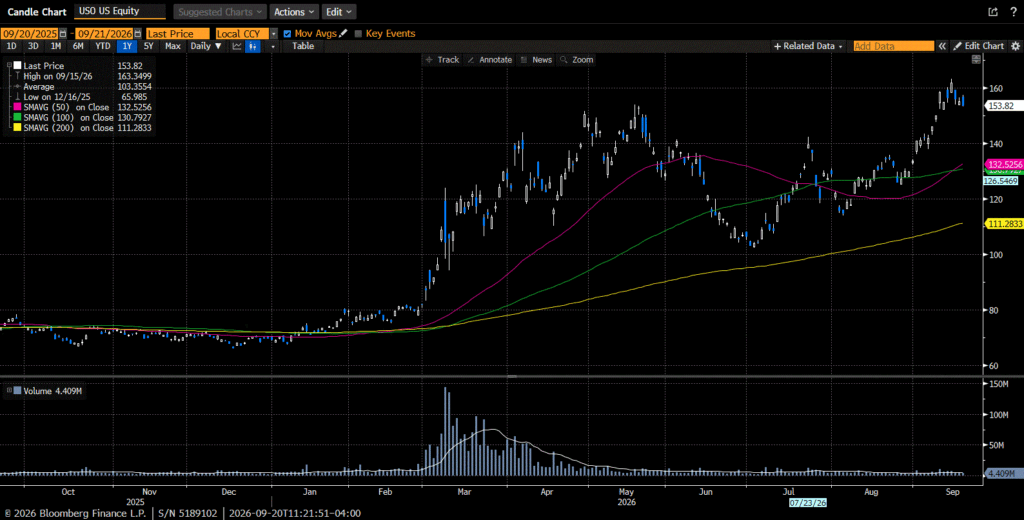
The S&P 500 gained 1.5%, the Dow rose 1.3%, the NASDAQ added 1%, and the Russell 2000 advanced by 0.9%. The US yield curve flattened over the week asshorter-term tenured paper yields increased, while longer-term tenured yields decreased. The 2-year yield increased by four basis points to 3.92%, while the10-year yield fell by four basis points to close at 4.39%. Oil prices fell by $0.86 or 1.3% to close the week at $65.17 a barrel. Gold prices fell by $22.60 to $3335.70 an ounce. Copper’s price continued its surge, jumping 3.2% to close at $5.79 per pound. Bitcoin was little changed over the week but did see a significant selloff on Friday before recovering on Saturday. Bitcoin is currently trading at $118,133. The US Dollar index fell by 0.8% and closed the week at 97.69.
The economic calendar was relatively quiet, but it will pickup in the coming week with the release of important inflation and payrolls data. Leading Indicators were lower than expected at -0.3%. Existing Home Sales and New Home Sales were also lower than expected, even as Mortgage Applications increased over the prior week. Initial Jobless Claims fell by 4k to 217k, while Continuing Claims increased by 4k to1955k. A preliminary look at July’s S&P Global Manufacturing fell back into contraction at 49.5, while the Services PMI figure increased to 55.2 from June’s level of 52.9. Durable Goods orders fell by 9.3, which was a smaller decline than expected. The Ex-auto figure increased by 0.2% versus an estimated decrease of 0.2%.
Investment advisory services offered through Foundations Investment Advisors, LLC (“FIA”), an SEC registered investment adviser. FIA’s Darren Leavitt authors this commentary which may include information and statistical data obtained from and/or prepared by third party sources that FIA deems reliable but in no way does FIA guarantee the accuracy or completeness. All such third party information and statistical data contained herein is subject to change without notice. Nothing herein constitutes legal, tax or investment advice or any recommendation that any security, portfolio of securities, or investment strategy is suitable for any specific person. Personal investment advice can only be rendered after the engagement of FIA for services, execution of required documentation, including receipt of required disclosures. All investments involve risk and past performance is no guarantee of future results. For registration information on FIA, please go to https://adviserinfo.sec.gov/ and search by our firm name or by our CRD #175083. Advisory services are only offered to clients or prospective clients where FIA and its representatives are properly licensed or exempted.