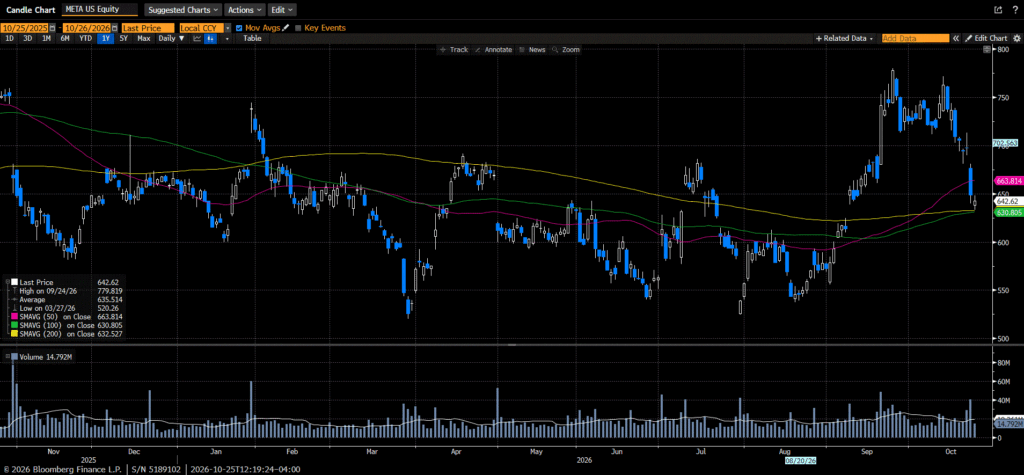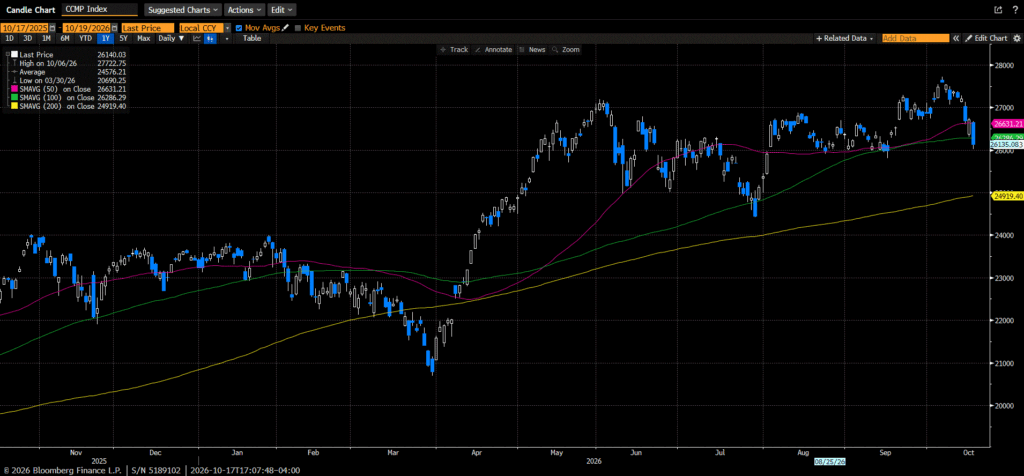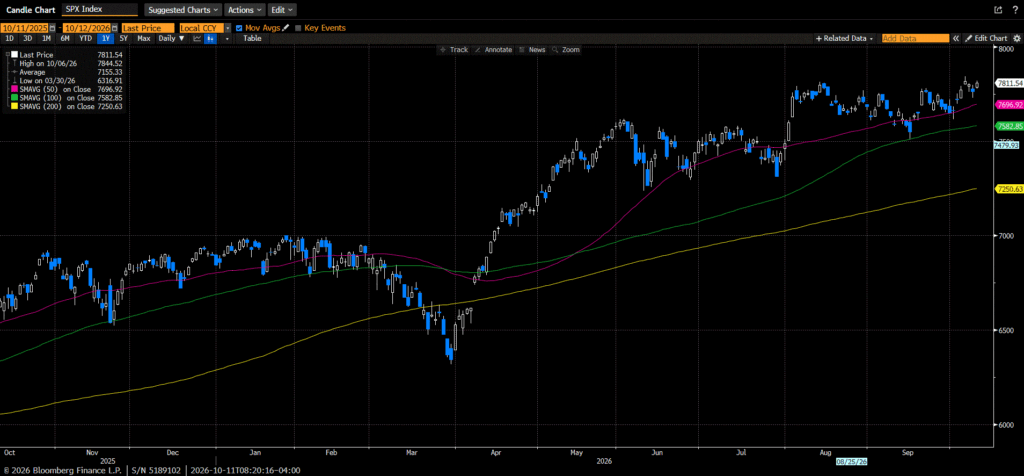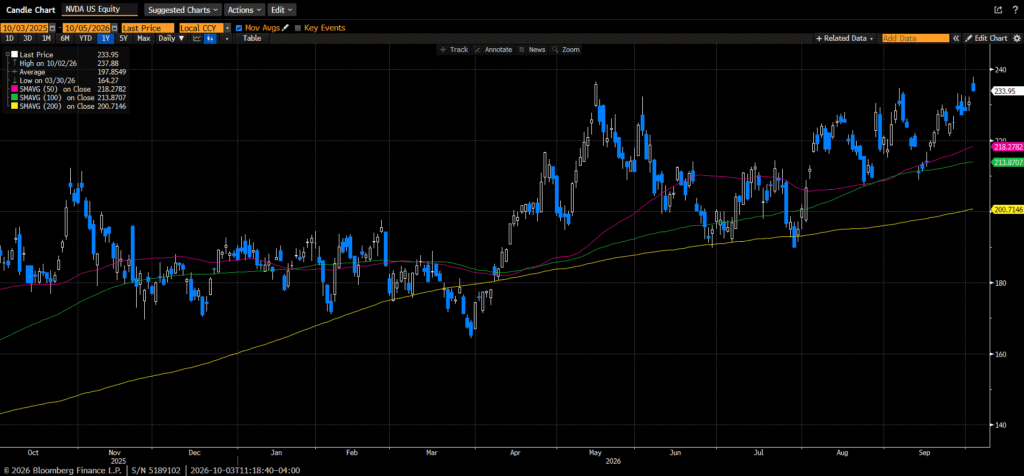


Markets pushed back on an early week sell-off to close at record highs for the S&P 500 and NASDAQ. A building sense that the market is due for a pullback was met with inline consensus inflation data, continued outperformance in the semiconductors, and a noticeable outperformance in small-cap issues. In Washington, politicians were able to avoid a government shutdown for the time being with hopes that a full-year spending bill could be forged in September. Fed speak over the week was in line with prior rhetoric, while European central bank officials called for rate cuts sooner rather than later, and Bank of Japan policy comments continued to come from both sides of the mouth.

The S&P 500 gained 0.9% and is up 7.7% for the year. The Dow fell 0.1% even as Dow component Salesforce.com gained 8.2% on the week. The NASDAQ joined the S&P 500 and DOW with a new all-time high, adding 1.7% on the week and forging an 8.4% advance in 2024. The Russell 2000 outperformed with a 3% jump and turned positive for 2024. Interestingly, the market-weighted S&P 500 index underperformed the equal-weighted S&P 500 index, while the equal-weighted index matched the performance of the Mega-cap weighted index.
US Treasuries rallied across the curve with shorter-duration tenors, outperforming their longer-duration counterparts. The 2-year yield fell by nineteen basis points to 4.53%, while the 10-yield declined eight basis points to 4.18%. Surprisingly, yields dropped even with weak showings in the 2-year and 5-year auctions.
Oil prices rallied as conflict in the Middle East continued, and the hope for a ceasefire in Gaza anytime soon diminished. Talk that the upcoming OPEC+ meeting would result with continued production curbs also allied the rally. WTI gained 4.5% or $3.45 on the week to close at $79.97 a barrel. Gold prices gained 2.3% or $47.30 to close at $2095.50 an Oz. Copper prices fell by $0.02 to $3.86 per Lb. Notably, Bitcoin broke above the $60,000 level to close at $61,894, about $ 7,000 shy of its all-time high. The US dollar index changed little, going up 0.1% to 103.84.

The economic calendar was stacked this week with investors keenly focused on the Fed’s preferred measure of inflation, the PCE. The headline reading of PCE came in a bit lighter than expected at 0.3% and showed a decline year-over-year to 2.4% in January from 2.6% in December. The Core reading, which excludes food and energy, came in line with expectations at 0.4% on a month-over-month basis and also showed a decline on a year-over-year basis at 2.8% in January versus 2.9% in December. The Core reading was the lowest since March of 2021 and encouraged the notion that inflation continues to subside. Personal Income rose by 1%, higher than expected, while Personal Spending was in line with expectations at 0.2%. The final reading for the University of Michigan’s Consumer Sentiment Index slightly declined to 76.9 from the prior month’s reading of 78.8. January Pending Home Sales fell by 4.9%, well below the estimated gain of 0.1%. The February S&P Global Manufacturing PMI increased to 52.1, above January’s 51.5 result. Interestingly, the ISM Manufacturing Index showed further contraction, coming in at 47.8 versus the prior month’s reading of 49.1.
Investment advisory services offered through Foundations Investment Advisors, LLC (“FIA”), an SEC registered investment adviser. FIA’s Darren Leavitt authors this commentary which may include information and statistical data obtained from and/or prepared by third party sources that FIA deems reliable but in no way does FIA guarantee the accuracy or completeness. All such third party information and statistical data contained herein is subject to change without notice. Nothing herein constitutes legal, tax or investment advice or any recommendation that any security, portfolio of securities, or investment strategy is suitable for any specific person. Personal investment advice can only be rendered after the engagement of FIA for services, execution of required documentation, including receipt of required disclosures. All investments involve risk and past performance is no guarantee of future results. For registration information on FIA, please go to https://adviserinfo.sec.gov/ and search by our firm name or by our CRD #175083. Advisory services are only offered to clients or prospective clients where FIA and its representatives are properly licensed or exempted.