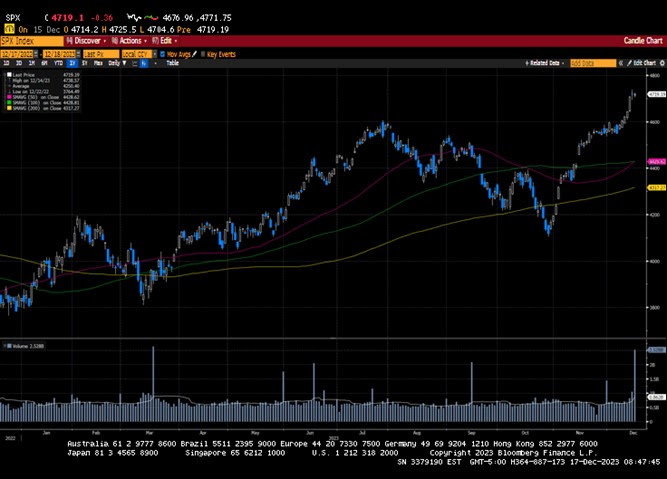
The Bull market continued its rally streak to seven consecutive weeks, something not seen since 2017. Wall Street threw a “pivot party” as the US Federal Reserve’s Open Market Committee meeting ended with a surprisingly dovish tone. As expected, the Fed kept its policy rate unchanged at 5.25%-5.50%, but the updated Summary of Economic Projections now shows a median expectation of three rate hikes in 2024, up from two. The SEP also showed better economic growth prospects and lowered inflation expectations. In the post-meeting Q&A, Fed Chairman Jerome Powell’s dovish demeanor seemed the opposite of his hawkish tones from just two weeks ago. Chairman Powell also conveyed that the FOMC had discussed the prospect of cutting rates at the meeting.
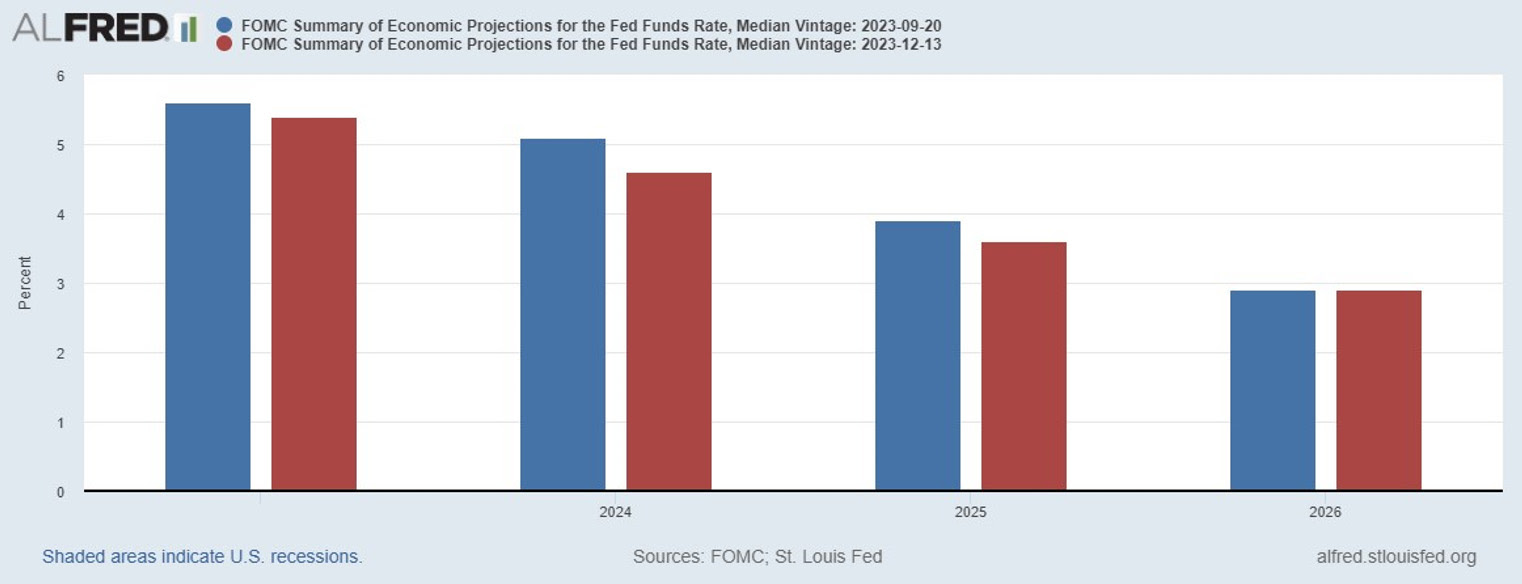
The markets loved the notion of the Fed’s dovish pivot and now have priced in six rate hikes in 2024. The European Central Bank and the Bank of England also left their rates unchanged but struck a much more restrictive tone in their post-meeting Q&A. South Korea’s central bank and the Hong Kong Monetary Authority left their rates unchanged. They suggested that more rate hikes may be needed to combat inflation, while the Norges bank raised rates by 25 basis points and telegraphed the need for more hikes in the future. The Bank of Japan’s meeting is this week, and investors will closely watch it to see If Japan will indeed move away from its negative rate policy.
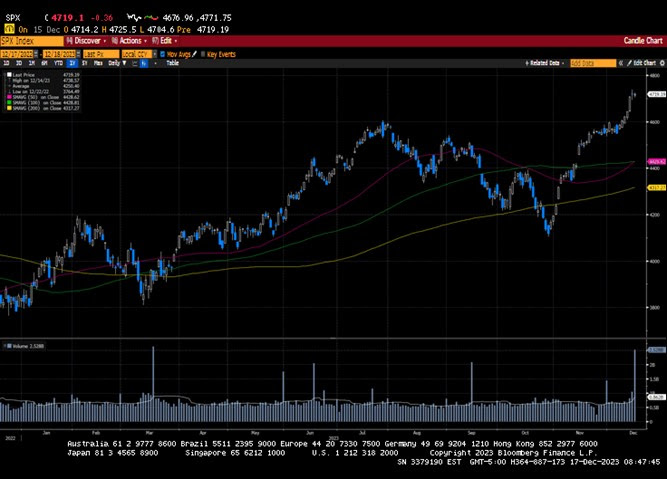
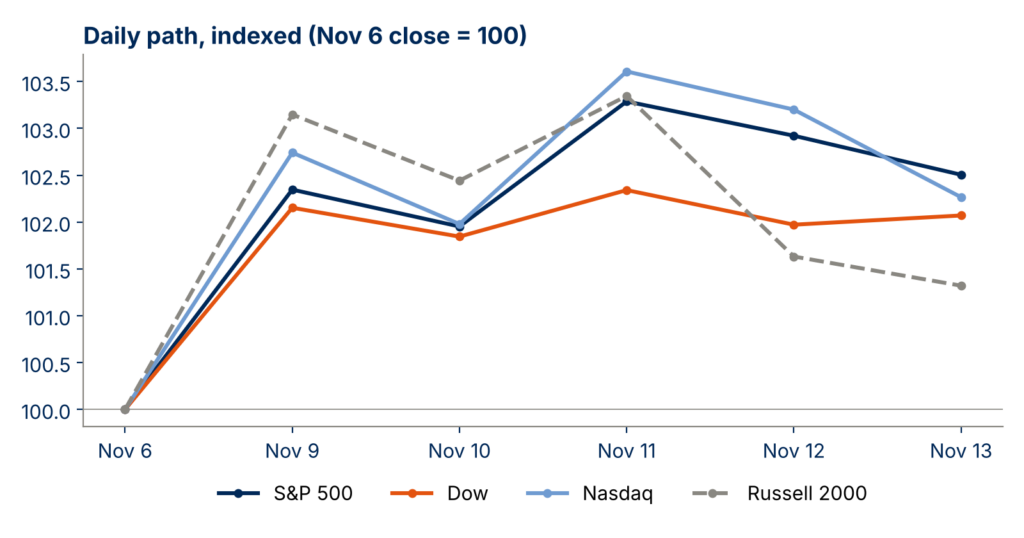
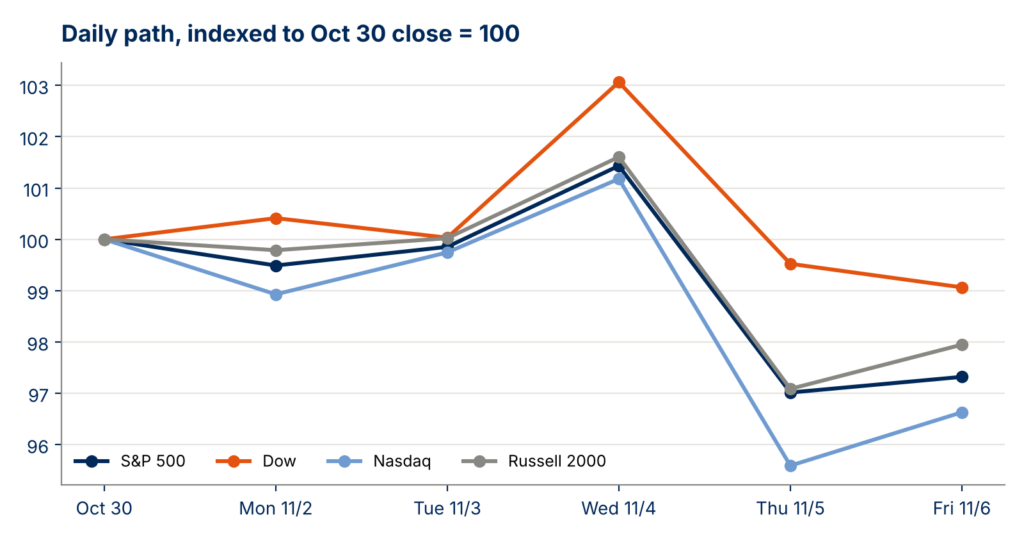
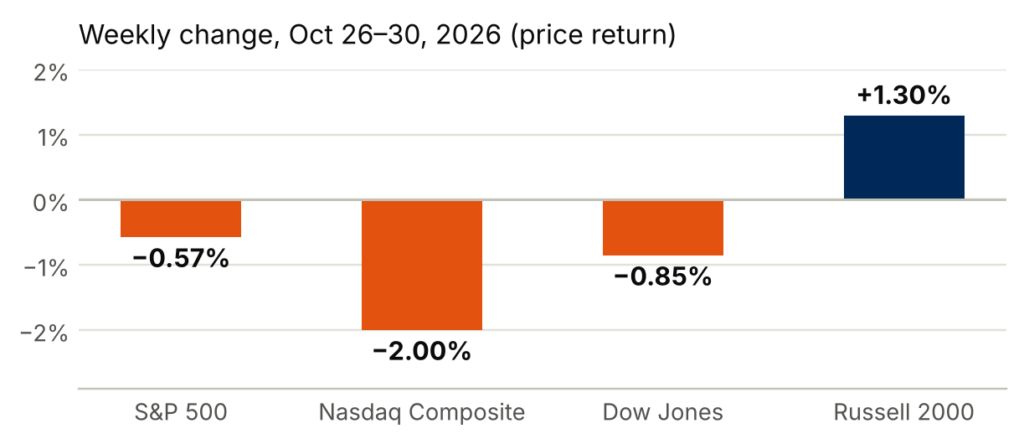
The S&P 500 gained 2.5%, the Dow rose 2.9%, the NASDAQ increased by 2.8%, and the Russell outperformed for the third week, gaining 5.5%. US Treasuries rallied across the curve sending the 10-year yield south of 4%. The 2-year yield decreased by twenty-eight basis points to 4.46%, while the 10-year yield plunged by thirty to close at 3.93%. The lower yields catalyzed a sell-off in the US dollar, with the DXY falling 1.484% on the week. Oil prices ended little changed this week, gaining $0.22 to close at 71.40 a barrel. Gold prices increased by $20.20 to $2034.90 an Oz. Copper prices rose by a nickel to $3.88 per Lb.
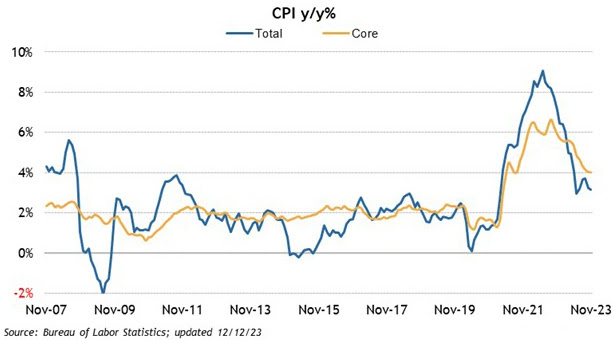
The economic calendar was full this week and, for the most part, continued to support a soft landing narrative. The Consumer Price Index increased by 0.1% from last month, slightly above the estimate of 0%. On a year-over-year basis, prices increased by 3.1%, down from the 3.2% reading in October. The Core CPI, which excludes food and energy, increased by 0.3% versus the consensus estimate of 0.2%. On a year-over-year basis, the reading came in at 4%, unchanged from October. Shelter prices continued to rise but are expected to fall off over the next few months. The Producer Price Index or PPI was flat month over month and was up 0.9% in November, down from October’s print of 1.2%. Core PPI was also flat versus the expectation of 0.2%. Core PPI rose 2% YoY, down from 2.3% in the prior month. Bottom line- inflation continues to come down. November Retail sales increased by 0.3%, above the expected 0.1%. Ex-Autos, Retail Sales increased by 0.2%, in line with forecasts. The bottom line is that the consumer continues to spend. Initial Jobless claims fell by 19k to 202k, while Continuing Claims increased by 20k to 1876k. MBA Weekly Mortgage Applications increased by 7.4% as interest rate declines induced activity. Industrial Production was up 0.2% vs. an expected 0.3%. Capacity Utilization came in at 78.8, slightly lower than the anticipated 79.2.
Investment advisory services offered through Foundations Investment Advisors, LLC (“FIA”), an SEC registered investment adviser. FIA’s Darren Leavitt authors this commentary which may include information and statistical data obtained from and/or prepared by third party sources that FIA deems reliable but in no way does FIA guarantee the accuracy or completeness. All such third party information and statistical data contained herein is subject to change without notice. Nothing herein constitutes legal, tax or investment advice or any recommendation that any security, portfolio of securities, or investment strategy is suitable for any specific person. Personal investment advice can only be rendered after the engagement of FIA for services, execution of required documentation, including receipt of required disclosures. All investments involve risk and past performance is no guarantee of future results. For registration information on FIA, please go tohttps://adviserinfo.sec.gov/and search by our firm name or by our CRD #175083. Advisory services are only offered to clients or prospective clients where FIA and its representatives are properly licensed or exempted.